
Few artists in modern music have managed to stay at the very top of popular culture for nearly three decades — and fewer still have done it entirely on their own terms. Beyoncé Giselle Knowles-Carter, born September 4, 1981, in Houston, Texas, is that rare superstar who seems to level up with every era rather than fade. She is not just a singer or a performer; she is a cultural institution, a business empire, and a case study in artistic reinvention. With 35 Grammy Awards and a record 99 nominations — more than any artist in the award’s history — she stands alone at the summit of the music industry (People). This is the story of how a girl from Houston became the most awarded act in Grammy history, and why, album after album, she keeps rewriting the rules of what a pop star can be.
Houston Roots
Beyoncé’s story begins in Houston, Texas, where she was born and raised in a city whose cowboy heritage, country music, and zydeco traditions shaped her from an early age — she grew up listening to country music through her grandfather, and her family attended the Houston Livestock Show and Rodeo every year (Wikipedia). Decades later, that Texas upbringing would become the conceptual backbone of Cowboy Carter, proof that her art has always drawn from the well of her own biography. As a child she competed in singing and dancing talent shows, and by her teens she was already performing in girl groups managed by her father, Mathew Knowles — the apprenticeship that would lead directly to Destiny’s Child.
The Destiny’s Child Years: Learning to Be a Survivor
Before the solo throne, there was the group. Destiny’s Child — in its final and most iconic form, Beyoncé Knowles, Kelly Rowland, and Michelle Williams — became one of the best-selling female groups of all time and a global symbol of female empowerment (Britannica). Their debut single, “No, No, No,” released in October 1997, became their first major hit, and their self-titled debut album followed in 1998 (Wikipedia). The breakthrough came with 1999’s The Writing’s on the Wall, preceded by “Bills, Bills, Bills,” the group’s first Billboard Hot 100 number one (Wikipedia). Then came the era-defining “Say My Name” and, later, the defiant anthem “Survivor,” whose title and theme turned the group’s much-publicized lineup changes and media feuds into a badge of honor (AllMusic). Beyoncé’s own songwriting, including hits like “Bootylicious,” was already central to the group’s success, and in 2005 Destiny’s Child were recognized as the world’s best-selling female group of all time at the World Music Awards (Britannica). The group won three Grammy Awards, including two for “Say My Name,” which also earned Beyoncé her very first Grammy in 2001 (Headliner Magazine). When the trio went on hiatus in the mid-2000s, the stage was set — and Beyoncé was more than ready.
Going Solo: Dangerously in Love (2003)
In 2003, Beyoncé launched her solo career with the hotly anticipated Dangerously in Love, the first step in a multi-platinum, record-breaking run (Ticketmaster). Anchored by hits like “Crazy in Love” and “Baby Boy,” the album was both a commercial juggernaut and a critical triumph, winning five Grammy Awards — including Best Contemporary R&B Album — and tying the record for the most awards won by a woman in a single night (Wikipedia). The message was clear: Beyoncé was no longer just the frontwoman of a group. She was a solo force of nature.
The Reinvention Years
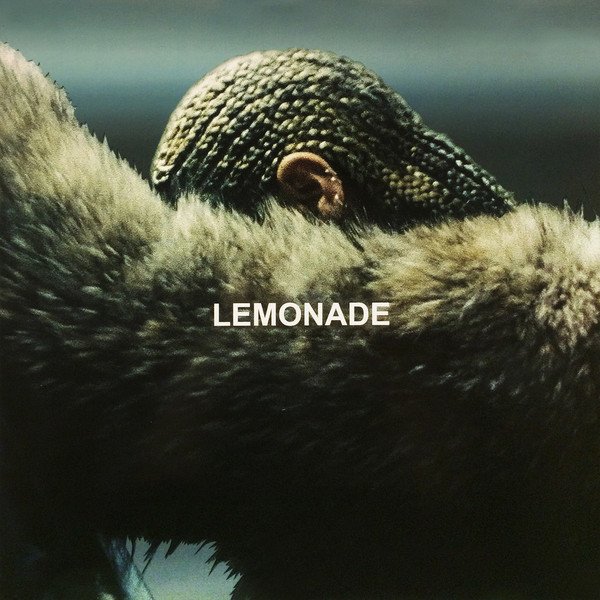
What followed was one of the most impressive discographic runs in pop history. B’Day arrived in 2006 and earned her a second consecutive Grammy for Best Contemporary R&B Album (Wikipedia). I Am… Sasha Fierce (2008) gave the world “Single Ladies (Put a Ring on It),” a song and video that became a full-blown cultural phenomenon. 4 (2011) leaned into a richer, more vocal-driven sound and delivered the Grammy-winning “Love on Top.” Then, in December 2013, she detonated the industry’s playbook entirely: her self-titled fifth album dropped overnight, with no prior announcement, accompanied by a video for every track. The surprise release redefined how albums could be launched in the streaming era, and “Drunk in Love” took home Grammys for Best R&B Song and Best R&B Performance (Wikipedia). Lemonade (2016), released alongside a landmark HBO visual album, fused personal narrative with political commentary and became her most acclaimed — and most discussed — work to date. By the end of the 2010s she had also collected a then-record six Grammys in a single night in 2010, breaking the record she had tied in 2004 (Wikipedia). Each album was an event; each era had its own visual language, its own thesis, its own Beyoncé.
Renaissance, Cowboy Carter, and the Trilogy
In 2022, Beyoncé began a new chapter. Renaissance, an ecstatic tribute to Black and queer dance music culture, was announced as act i of a trilogy conceived and recorded during the pandemic, which she described as one of her most creative periods (StubHub). It became the most critically acclaimed album of 2022, topping year-end lists from the Los Angeles Times to The New York Times, NPR, Pitchfork, and Rolling Stone, and earned a record-setting nine Grammy nominations; the trophy for Best Dance/Electronic Album made her the most awarded artist in Grammy history (Headliner Magazine).
Then came act ii. Cowboy Carter, released March 29, 2024, through Parkwood Entertainment and Columbia Records, is a concept album that reinvents Americana through a Black lens, folding country, folk, blues, and rodeo iconography into her Houston-rooted worldview (Wikipedia). It dominated the 2025 Grammy nominations with eleven nods — bringing her career total to a record 99 (AP News) — and she took home three wins, including at last the coveted Album of the Year (Grammy.com). With Renaissance and Cowboy Carter, Beyoncé did what only the greats manage twice in a career: she made two genres her own, back to back.
A Live Powerhouse
Onstage, her reputation is untouchable. The Renaissance World Tour broke the record for the highest-grossing tour by a Black artist in history (Wikipedia). She then doubled down with the Cowboy Carter Tour — staged in full as the “Cowboy Carter and the Rodeo Chitlin’ Circuit Tour” — a 32-show stadium run that ran from April 28 to July 26, 2025 (Wikipedia). After just her five opening nights at SoFi Stadium in Inglewood, Billboard Boxscore reported a $55.7 million gross — the biggest ever for a female artist’s run at a single stadium in Boxscore history, with the tour going on to top the year-end touring charts (Wikipedia).
From singing in Houston talent shows to rewriting Grammy history, from “Say My Name” to “Texas Hold ‘Em,” Beyoncé’s career is a masterclass in evolution without compromise. The trilogy may be complete, but if her track record teaches us anything, it’s this: whatever act she dreams up next, the world will stop to watch. As the Cowboy Carter era proved once again, the most reliable record in music is the one Beyoncé is about to break next.
Header image suggestion: a split-era portrait collage — Destiny’s Child-era Beyoncé on the left, silver Cowboy Carter chaps on the right.